This article contains the FAQs for the C60000 Series Ninja™ Foodi™ NeverStick® Stainless Cookware. This supports the following product SKUs: C60020, C60026, C60026C, C60030, C60030C, C60130, C60215, C60225, C60235, C60465, C60480, C62000, C62200, C63000, C69500 and C69500C.
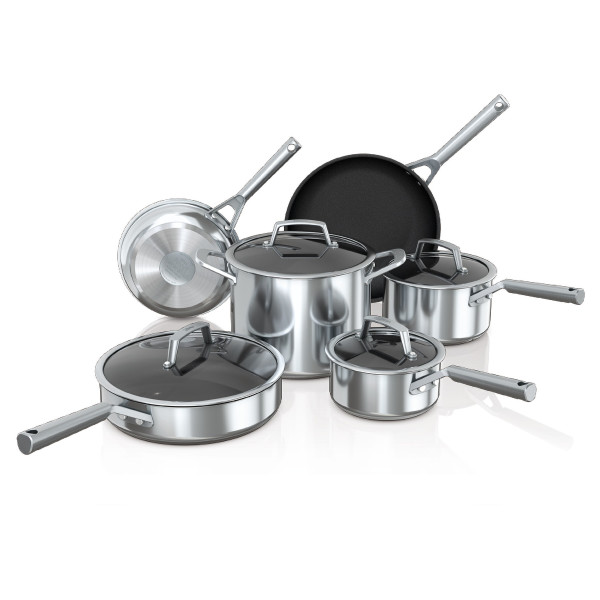
Product Specifications
How long are the handles on the pans?
The handles are either 7 or 8 inches long, depending on the size of the pan.
How do I know the size of my frying pan?
The diameter of the top of the rim on the pan is the size fry pan you have.
What pans have nonstick coating?
The fry pans in the Essential Stainless line are the only pans with NeverStick® interior coating. All others have a brushed stainless steel interior.
Why is the NeverStick® coating textured?
Plasma ceramic particles are fused to the surface of the pan, creating a super-hard, textured surface that interlocks with our exclusive coating for a superior bond. Plus, our coating is metal-utensil safe, dishwasher safe, and enables excellent food release.
Cleaning/Maintenance
How do I clean my pans?
Pans can be hand-washed or cleaned in the dishwasher once cooled.
CLEANING & CARE
Allow cookware to cool completely before washing. Never immerse a hot pan in cold water, as this may lead to irreparable warping. Always clean cookware thoroughly after use, as grease buildup over time can lead to food sticking. If you notice grease or discoloring on the stainless steel handles or stainless steel exterior, clean thoroughly with baking soda and white vinegar, then wipe with a sponge or soft cloth.
DISHWASHER
Use automatic dishwashing detergent without bleach or citrus additives. Prolonged, regular dishwashing may eventually mark or discolor your cookware.
HAND-WASHING
Use mild liquid dish soap. Abrasive pads and sponges should only be used if they are approved for use on nonstick cookware. DO NOT use abrasive cleansers or cleaning pads not rated for nonstick cookware, as they can damage cookware.
How can I safely remove sticky and/or burnt-on debris from my pan?
Wait until your pan cools and soak it in warm water, then use a non-abrasive sponge or towel to remove any debris.
Why are the outsides of my pans discolored?
If cooking on a gas range, do not allow the flame to rise along the outside of the pan, as this may lead to discoloration.
How can I clean the stainless steel exterior and the stainless steel handles?
If you notice grease or discoloring on the stainless steel exterior or stainless steel handles, clean thoroughly with baking soda and white vinegar, then wipe with a sponge or soft cloth.
How can I keep the the handles and bottom exterior of the pans from discoloring?
The pans can be cleaned with white vinegar, baking soda, and a soft cloth to remove built-up grease and reduce discoloration.
Why is there discoloration on the bottom exterior of the pan?
Tall gas flames, grease, and abrasive cleaning (with metal wool, for example) can cause the exterior of the pan to discolor. This will not affect cooking performance, and you can try cleaning with white vinegar, baking soda, and a soft cloth to reduce discoloration.
Cooking
What type of cooking surface will my pan work on?
The Ninja™ Foodi™ NeverStick® Essential Stainless Cookware is all-range capable: gas, electric, glass-ceramic, and induction.
Can I use cooking spray in my pans?
Never use aerosol cooking sprays. These burn at low temperatures and will leave a residue that leads to sticking.
Why does it say not to use high heat while cooking on the stovetop?
Overheating can damage the cooking surface. High heat is never required because of the high thermal conductivity of our cookware. Use low to medium-high heat. Start with medium heat and adjust accordingly. Always place your pan on the center of the heating surface.
What types of utensils can I use in my pans?
All utensils are safe for use, including metal utensils, such as metal spatulas, spoons, whisks, and tongs. Never use sharp instruments such as knives or forks or appliances such as electric mixers to cut, chop, or whip foods in any nonstick pan. Such use will damage the nonstick finish and void the warranty.
Why does food sometimes stick to my pans?
Overheating your pans can lead to food burning and sticking. Also, if you used an abrasive cleaning tool, it could have damaged the cooking surface and caused food to stick.
Will Ninja™ Foodi™ NeverStick® pans really never stick?
When properly preheated, NeverStick® Technology enables excellent food release without sticking. To determine if your pan is ready for use, simply add a few drops of water. If you hear a sizzle, the pan is ready for use. If not, continue preheating.
Why does liquid run to the edges of the pan?
Our pans have a built-in concavity to keep them stable, and due to the hydrophobic nature of our coating, water, and other liquids will tend to move toward the edges of the pans. Also, overheating a pan or shocking a hot pan with cold water can cause irreparable warping.
Preparing to Use
Is it safe to use my pan in the oven?
Yes, all Ninja™ Foodi™ NeverStick® Essential Stainless Cookware and lids are oven safe up to 500°F. Easily go from stovetop to oven to finish cooking meats, brown toppings, or bake like you can in cast iron.
Is it safe to use my pan under a broiler?
Yes, all Ninja™ Foodi™ NeverStick® Essential Stainless Cookware and lids are oven-safe up to 500°F. Easily go from stovetop to oven to finish cooking meats, brown toppings, or bake like you can in cast iron. If using with your broiler, make sure your temperature is no higher than 500°F and that there is space between the pan and the broiler.
Do I need to season my pans?
No, the NeverStick® coating does not need to be seasoned on fry pans. When using the sauté pan, saucepans and stock pots you should add butter or oil to help with food release.
Should I preheat my cookware and when do I know that it's ready for cooking?
Yes, when properly preheated, NeverStick® Technology enables excellent food release without sticking. To determine if your pan is ready for use, simply add a few drops of water. If you hear a sizzle, the pan is ready for use. If not, continue preheating.
Storage
What is the best way to store my pans?
We recommend storing your pans in a single layer if possible. If you need to stack your pans, place a sheet of paper towel or cloth towel in-between each pan to reduce the chances of coating damage.
Other
Why do I sometimes hear a popping noise when cooking?
The reason you could hear a noise while using your cookware on the stovetop is the lid of the cookware. Moisture can get trapped between the glass and the stainless steel rim around the glass and cause a popping/crackling/hissing sound. Or as the lid heats up and the glass and stainless steel start to expand slightly, rubbing can occur from the thermal expansion and create a noise.
Why is there a popping/crackling sound coming from the lid when cooking?
Two things can happen that can cause this noise:
- Moisture can get trapped between the glass and the stainless steel rim around the glass and cause a popping/crackling/hissing sound. This is normal and will not affect cooking performance.
- As the lid heats up and the glass and stainless steel start to expand slightly, rubbing can occur from the thermal expansion and create noise. There is no need for concern.