This article contains the FAQs for the JC100 Series Ninja® Cold Press Juicer Pro. This supports the following product SKUs JC100, COJ105, JC100C, JC101, JC101C and JC151.
Juicing
Why is no juice coming out of the juicer?
Ensure the anti-drip lever is open before juicing. Close after juicing to prevent dripping on the unit and counter.
You can expect 1 lb. of produce to yield approximately 8 oz. of juice. Yield will vary depending on produce type and seasonal nature of the produce.
Note: You may not see juice dripping when processing a small quantity of certain produce. Ingredients such as grapes and berries will require ample quantity due to low product yield.
Can I juice frozen fruit and vegetables or add ice?
No. DO NOT process frozen fruit, vegetables, or ice.
How do I prep ingredients to juice?
For best results, cut ingredients in 2-inch pieces. Always use the freshest and ripest fruit and vegetables and wash them prior to juicing.
Remove skins and rinds from ingredients such as citrus fruit, melons, pineapple, dragon fruit, mangoes, pomegranates, beets, ginger, papayas, and root vegetables. The peel or skin can remain on for ingredients such as apples, pears, peaches, plums, cucumbers, and carrots.
Remove stems from apples (no need to remove the core or seeds). Remove stems from herbs if desired. Remove large pits and seeds from ingredients such as mangoes, plums, peaches, cherries, papayas, lemons, melons, and peppers.
DO NOT process ingredients that do not contain juice, such as bananas or avocados.
DO NOT process frozen fruits and vegetables or ice.
See the Juicing 101 Chart in your QSG and IG for more helpful tips and tricks.
Are there any ingredients I can’t juice?
DO NOT process ingredients that do not contain juice, such as bananas or avocados.
DO NOT process frozen fruits and vegetables or ice.
Why did my unit stall when juicing?
The unit may stall due to overloading. The safety system may temporarily disable the motor if the unit is overloaded. In this case, stop juicing, unplug the motor base and allow it to rest for 2 minutes. Plug it back in and press START/STOP.
Juice has too much or too little pulp.
You can control the amount of pulp in your juice by choosing the desired filter. Use the black filter with the finest mesh for juice with no pulp. Use the dark gray filter with the larger mesh for juice with some pulp (not included with all models). Use the orange filter with the largest mesh for juice with lots of pulp.
For best results, we recommend using the orange (lots of pulp) filter when processing soft fibrous fruit like pears, berries, seeded melons, and pineapple.
There is clogging in the pulp filters.
When juicing solely fibrous ingredients, such as pineapple, you may have to clear the filters of pulp more often, especially when using the black (no pulp) filter.
Make sure you are using the correct filter for your ingredients. For best results, we recommend using the orange (lots of pulp) filter when processing soft fibrous fruits like pears, berries, seeded melons, and pineapple.
If there is pulp buildup on the metal portion of the filter, use a cleaning utensil to remove the excess before washing.
Why am I getting a lower juice yield than anticipated?
When using the juicer, you can expect 1 lb. of produce to yield approximately 8 oz. of juice (yield may vary depending on produce). Depending on the seasonality of ingredients, you may experience lower juice and pulp yield when using the black (no pulp) filter. If this occurs, we recommend using the orange (lots of pulp) filter.
Refer to the instructions that came with the unit for information about which filters are recommended for which ingredients. Following these guidelines will help reduce clogging and maximize yield.
There is buildup of pulp in the feed chute chamber.
The buildup of pulp in the feed chute area could be due to a clog in the pulp spout or the filter. If the feed chute chamber becomes blocked or ingredients are not processing, press and hold REVERSE. There will be a beep and a brief pause, then the auger will rotate in the opposite direction. Release REVERSE to stop. Repeat as needed. Press START/STOP to resume normal operation.
If the problem persists, disassemble and clean the pulp spout or filter before you resume juicing.
For best results, allow juicer to process each ingredient before adding more to the feed chute. Use the tamper to push ingredients down through the feed chute, as needed.
We also recommend using the orange (lots of pulp) filter when processing soft fibrous fruits like pears, berries, seeded melons, and pineapple.
Assembly
How do I install the pulp spout?
Attach the pulp spout to the feed chute chamber by installing at an angle on top of the filter, then turning counterclockwise to lock in place. Follow the arrows printed on the part to ensure correct assembly.
Ensure the auger and filter are installed correctly inside the feed chute chamber to allow the pulp spout to fit into place on the feed chute chamber.
How do I assemble the juicer?
Insert the auger into the feed chute chamber, then attach the desired filter onto the auger. Align the metal portion of the filter with the bottom of the auger. The filter will sit loosely around the auger.
Attach the pulp spout to the feed chute chamber by installing at an angle on top of the filter, then turning counterclockwise to lock in place.
Install the assembled feed chute chamber on the motor base at an angle, then turn counterclockwise until it clicks into place.
Install the food tray on the top of the feed chute chamber.
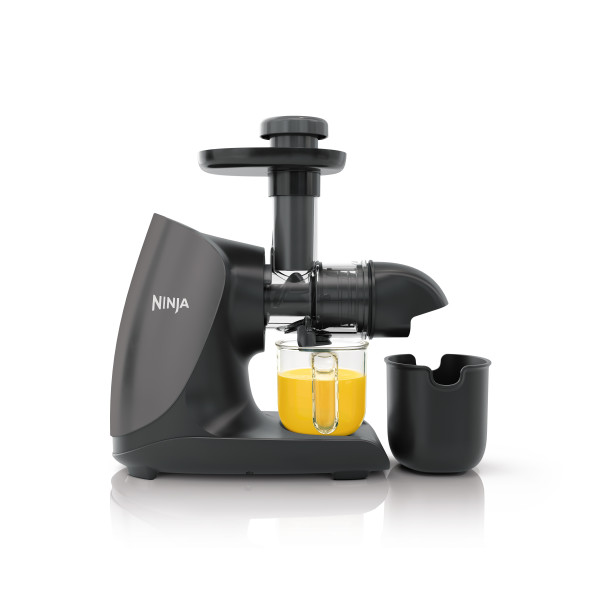
Place the juice jug under the anti-drip lever on the feed chute chamber. Make sure the anti-drip lever is open before juicing.
Place the pulp container under the pulp spout.
How do I disassemble the juicer?
Press and hold the RELEASE button while turning the feed chute chamber clockwise to remove it from the motor base.
Remove the pulp spout from the feed chute chamber by turning it clockwise. Remove the filter and auger by gently pulling them out of the feed chute chamber.
Unplug the unit when finished. If moving the unit, grab from the bottom of the base.
Product-Related
Why did my unit stop working and is beeping?
The unit was overloaded with ingredients. Wait 2 minutes, then press START/STOP to resume juicing.
Nothing happens when I press the REVERSE button.
Ensure that you press and hold the REVERSE button. While pressing and holding REVERSE, there will be a beep and a brief pause (3-5 seconds), then the auger will rotate in the opposite direction. Release REVERSE to stop. Repeat as needed. Press START/STOP to resume normal operation.
Why is my unit making a squeaky noise?
When the auger is breaking down fibrous ingredients like apples, celery, herbs and leafy greens, the unit will sometimes make this noise. This is normal and not a cause for concern. If you turn on the unit and hear a clicking noise before juicing, this is also normal and signals that the unit is working properly and ready to begin juicing.
How do I use the juicer?
Make sure the anti-drip lever is open before using the juicer.
Plug in the unit and make sure the assembled unit is on a dry, flat surface.
Press START/STOP, then gradually add ingredients to the feed chute. For best results, allow juicer to process each ingredient before adding more. Use the tamper to push ingredients down into the feed chute as needed. When done, press START/STOP to stop the unit.
Close the anti-drip lever so juice won’t drip onto the motor base. Remove juice jug from the unit, stir juice, and serve.
Why is there a hole in the pulp spout?
There is a small hole on the bottom of the pulp spout to help drain water after washing and cleaning.
Why is the feed chute chamber so narrow?
The narrow feed chute opening prevents injuries while using the juicer.
DO NOT put fingers or other objects into the juicer while operating. Use the tamper to dislodge food in feed chute if needed or turn the unit off to remove remaining food.
Cleaning & Maintenance
How do I clean my unit?
All parts except the motor base are top-rack dishwasher safe and should NOT be cleaned with a heated dry cycle. To hand-wash, wash parts in warm, soapy water.
If there is pulp buildup on the metal portion of the filter, use a cleaning utensil to remove the excess before washing.
DO NOT attempt to clean the unit by adding water to the feed chute while it’s attached to the motor base.
Are all parts dishwasher safe?
All parts except the motor base are top-rack dishwasher safe and should NOT be cleaned with a heated dry cycle.
If there is pulp buildup on the metal portion of the filter, use a cleaning utensil to remove the excess before washing.
Can I clean the unit by adding water?
DO NOT attempt to clean the unit by adding water to the feed chute while it’s attached to the motor base.
All parts except the motor base are top-rack dishwasher safe and should NOT be cleaned with a heated dry cycle. To hand-wash, wash parts in warm, soapy water.